Home / Vibe Marketing / Vibe Marketing vs Traditional Marketing: Differences
Vibe Marketing vs Traditional Marketing: Differences
October 17, 2025
2:18 pm


What is Traditional Marketing?
Traditional marketing is the old school process of marketing that most companies are still utilizing without realizing it. Traditional marketing is systematic and structured and is reliant on a team specialized in different tasks.
A traditional marketing workflow:
Brainstorm – Copy draft- Design- Feedback loop – Final Approval- Launch
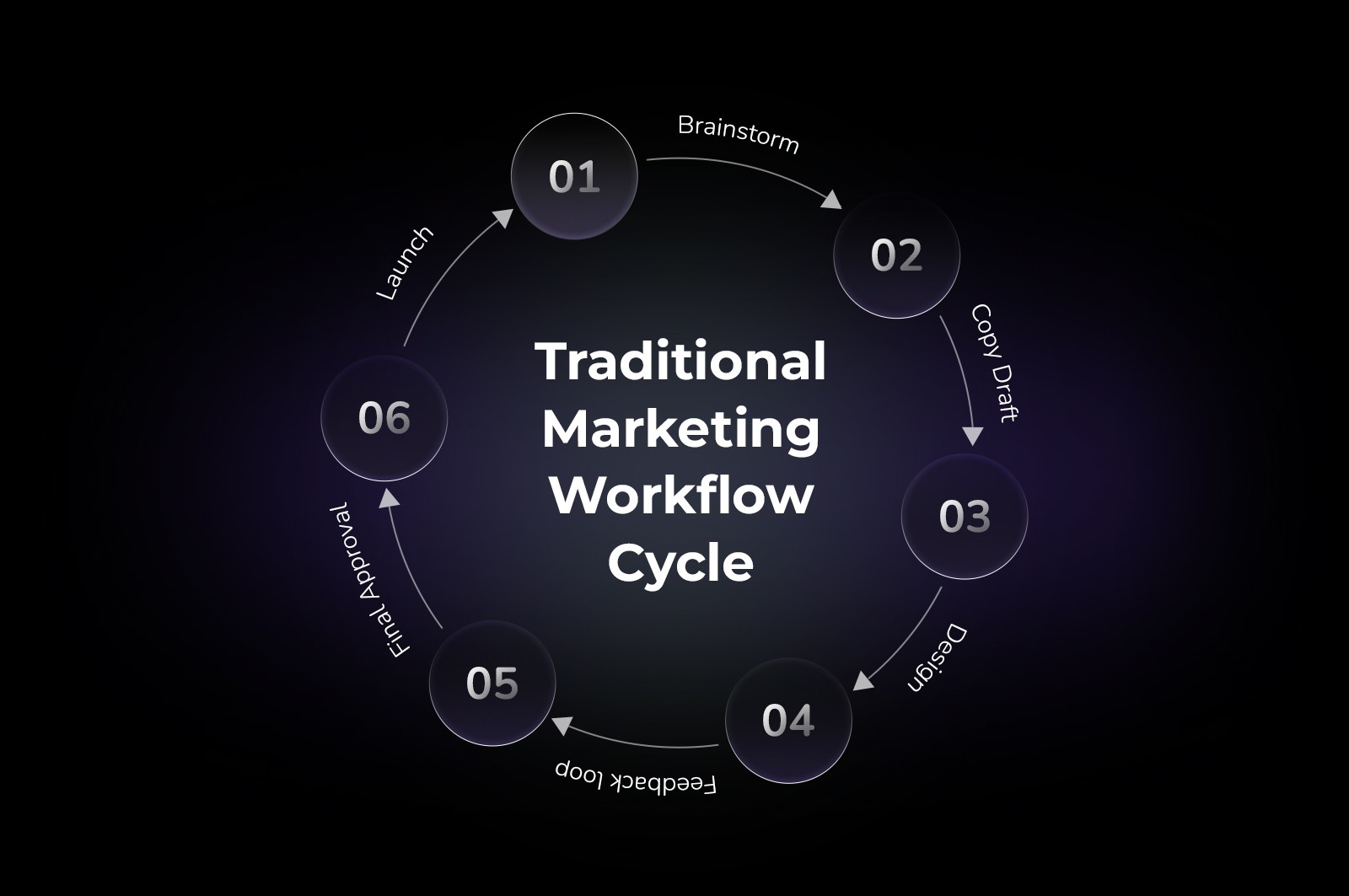
For example, copywriters and content writers produce content, SEO specialists work on optimizing the content, designers create the visuals, PPC managers and media buyers run ads, and product managers keep the parts moving.
Traditional marketing is heavily reliant on this sequential process, which is linear and slow, in contrast to AI marketing. Ideas shared in brainstorming sessions in traditional marketing turn into mockups, followed by multiple cycles of feedback and approvals.
By the time an idea passed through meetings, mockups, and feedback, the trend it was based around had already lost traction. In the current fast-paced marketing culture, time is everything.
But with marketing evolving every hour, momentum, speed, and efficiency determine who gets seen first. Vibe marketing vs traditional marketing is the difference between connecting with your customers vs competing for attention.
What is Vibe Marketing?
In early 2025, Andrej Karpathy introduced ‘vibe coding’, a simple way for developers to describe their intent in the form of a prompt. This method is written in plain language, allowing AI to handle coding, testing, and debugging.
Marketers adopted this mindset, and instead of coding, they describe the vibe (tone, mood, and emotions) while AI handles the campaign planning, creative generation, and content creation.
This shift changed markets into directors of emotions instead of managers of the process.
With AI marketing even smaller marketing teams can now create visuals, videos, and content in a fraction of the time. This can be achieved without any technical knowledge, background, or expertise.
Unlike traditional marketing that focuses more on features and benefits, AI marketing prioritizes emotion. How is AI marketing better than traditional marketing? Let’s break it down.
Components of Vibe Marketing
AI marketing includes certain nonnegotiable components, here’s what will help you set your brand apart from your competitors:
1. AI Tools
AI plays a crucial role in AI marketing, as it allows marketers to create personalized campaigns according to their target audience. Here’s how AI tools make workflows better for marketers:
Creating AI videos with avatars for social media platforms
Testing ad variations across different platforms within seconds
Generate creatives, content based on winning ideas
Crafting personalized messages to connect emotionally with ideal customers
For example, tools like Vibelets and Atria help in automating the whole process of campaign creation and creative generation within the interface.
2. Automation
Automation reduces the time invested in repetitive tasks, thus giving time for marketers to focus on their creative strategy.
Automation tools manage the tasks of scheduling content for social media, audience segmentation, optimizing a campaign according to performance, and email campaigns.
This ensures that every user’s interaction with the brand is consistent through every channel. With automation in place, marketing teams can now be leaner and faster.
3. No-Code Solutions
Vibe marketers do not require a degree in software engineering to function effectively. No-code platforms enable users to perform marketing actions such as generating images, creating videos, campaigns, automation, etc.
Components of Vibe Marketing
If you ever feel that it takes too long for your team to market, costs far too much, or never successfully makes it out of your project management tool, then this comparison table is for you. Here is how AI marketing wins over traditional marketing in terms of speed, cost, structure, and flexibility.
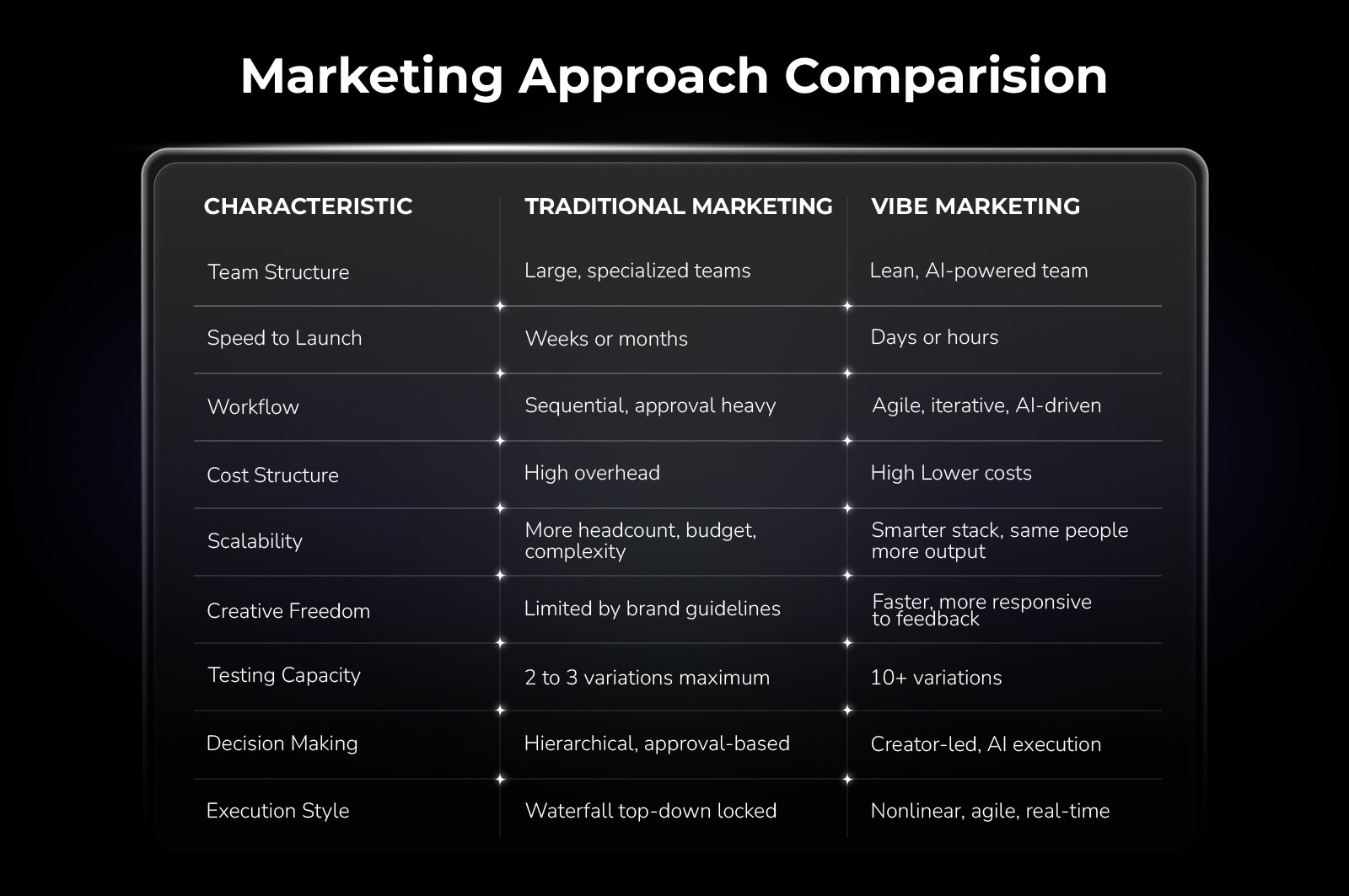
Switching to AI marketing is more than just an upgrade, it is a mindset shift. Vibe marketing vs traditional marketing is all about which one actually sells and adapts to the changes.
Emotional Advantage of Vibe Marketing
Vibe marketing vs traditional marketing have several things that make AI marketing more favorable. Traditional marketing focuses on logic, benefits, and funnels, whereas traditional marketing focuses on feelings that make the viewer stop scrolling.
Traditional marketing methods are transactional
Product-focused content
Highlights features, discounts, and deadlines
Ex: This tool helps increase productivity by 35%
Vibe marketing is more emotional
Shows people the emotion behind using our product
Tone, relevance, and timing help in building human connections
Ex: Your to-do list does not have to feel like a monster under your bed
Why emotions matter
Harvard Business School research reveals that, 95% of purchase decisions are driven by emotions and happen subconsciously.
Traditional marketing aims at clicks and conversions
AI marketing focused on building connections and loyalty
Real-world applications
Traditional marketing cart abandonment: “You added this product to your cart.”
AI marketing: “We thought we had a vibe… Why did you leave?”
One is a reminder, and the other one is a moment
To understand this better, here are some case studies of AI marketing that were successfully carried out by these brands.
Vibe Marketing Campaigns That Went Viral 200
Here are some examples of brands that hopped on the AI marketing trend and were successful.
1. Coca-Cola
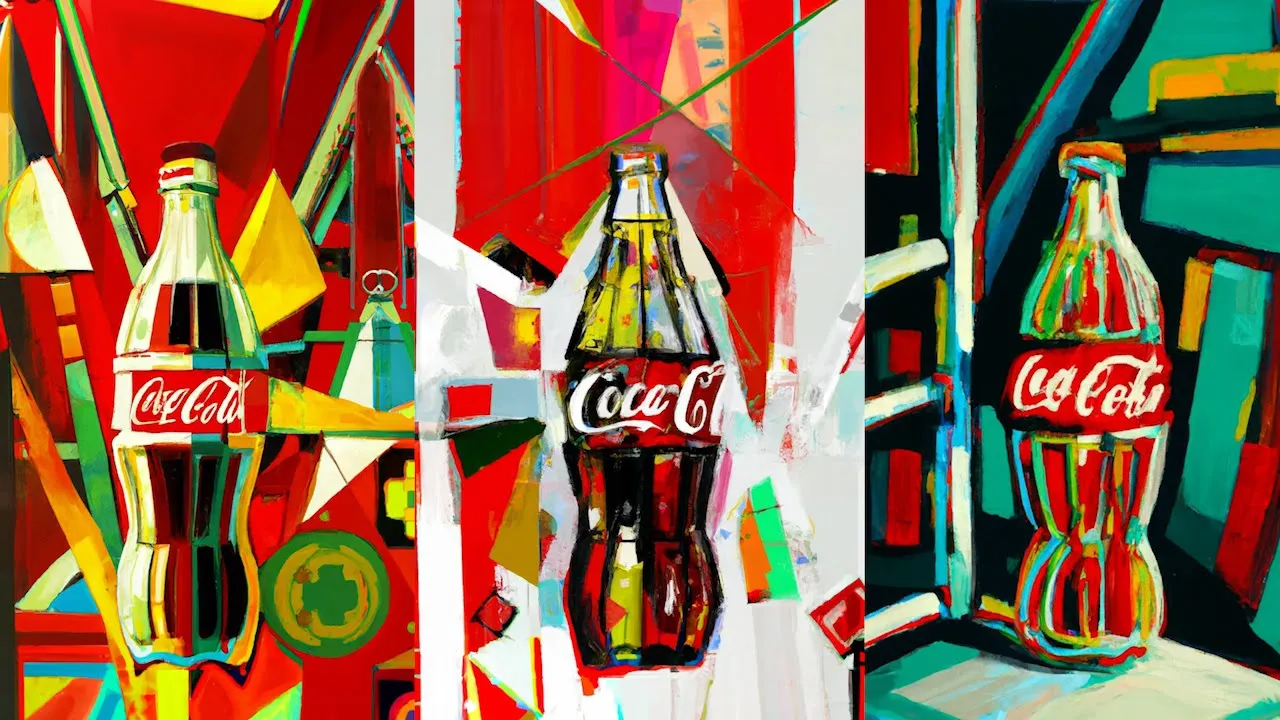
Coca-Cola ran a campaign where they inspired people to create their nostalgic version of their iconic Coca-Cola bottle. People hopped on the trend and created images using DALL-E 2, that reflected their perception of the brand.
The idea behind the campaign was not just to generate awareness but to make people part of the brand.
Result:
– Coca-Cola gained 120K+ submissions during this campaign and
– 7M+ Impressions on social media
2. Heinz
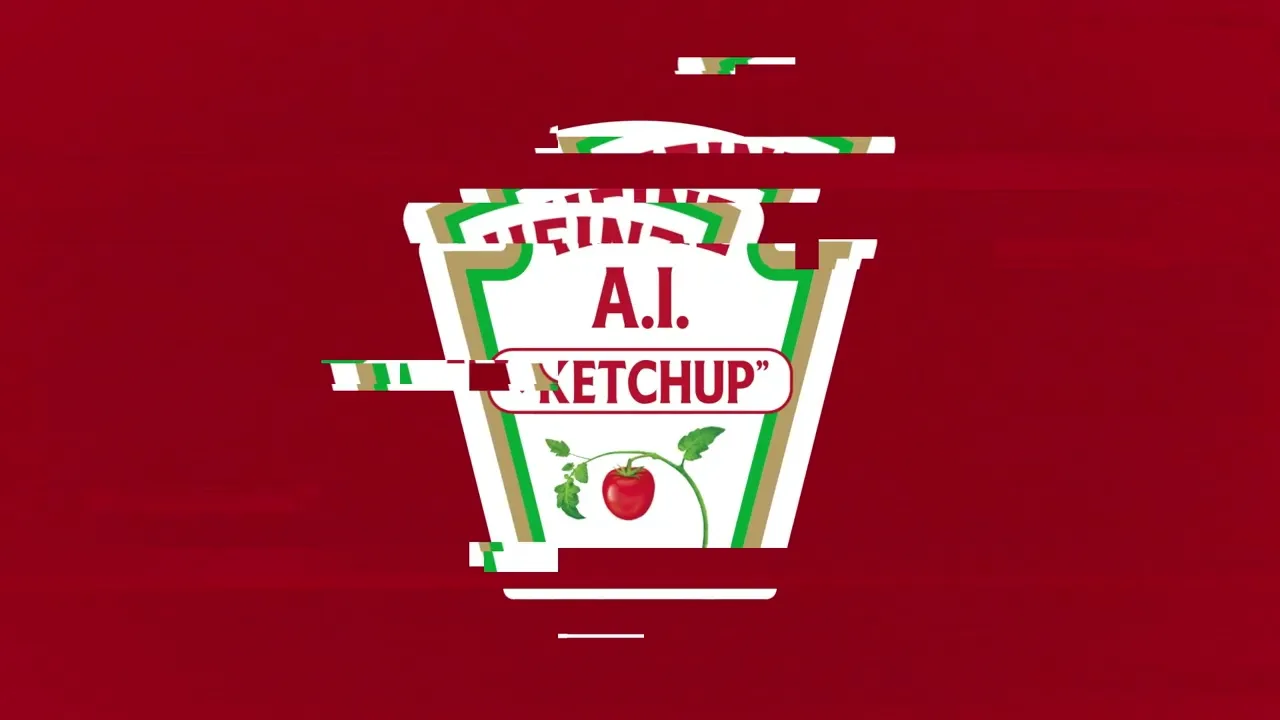
Heinz made sure that their AI marketing campaign made an impact, here’s how it went. Their marketing team asked DALL-E to generate an image of “ketchup,” and in almost all the images, DALL-E created a Heinz bottle.
The team saw the challenge as an opportunity and made it into a campaign that said, “Even AI knows ketchup = Heinz.”
The internet could not stop talking about it, and people loved it. This was a perfect mix of brand pride, tech novelty, and scroll-stopping content.
Results:
– Heinz gained about 15M+ organic impressions and
– Their sales bumped up by 15%
3. Spotify
Spotify went all in when it came to personalizing the vibe marketing campaign. Their team cloned a DJ’s voice and curated playlists for different users along with witty commentary that was tailored to their music.
The objective of this campaign was to not just get song suggestions from an algorithm but to get recommendations from your personal DJ.
Results:
Weekly engagement of users reached 40%
– Session times of each user increased by 30%
From image generation that sparks nostalgia to moonwalking to your personal DJ, brands did not miss their opportunity to shine on AI marketing. This is what brands are capable of doing now, but with the constant evolution of AI, think about what the future holds.
Vibe Marketing Campaigns That Went Viral 200
The future of marketing is not about selling, it’s about connecting with your ideal customer faster. Vibe marketing successfully reduces the gap between insights and execution by letting AI convert human intents into actionables.
Marketing brains like Vibelets take this one step further through automation, testing, creative creation, optimization, and focusing on creative strategy.
The competitive advantage that brands will gain through Vibelets is learning, adapting, and scaling before everyone else. This is where AI marketing leads and Vibelets becomes the marketing brain that powers it.